Layered Protocols for Capital Management Using Integrated Form Signals from Soccer, Tennis, and Horse Racing
Written by Jakob Roth · Oct 15, 2026
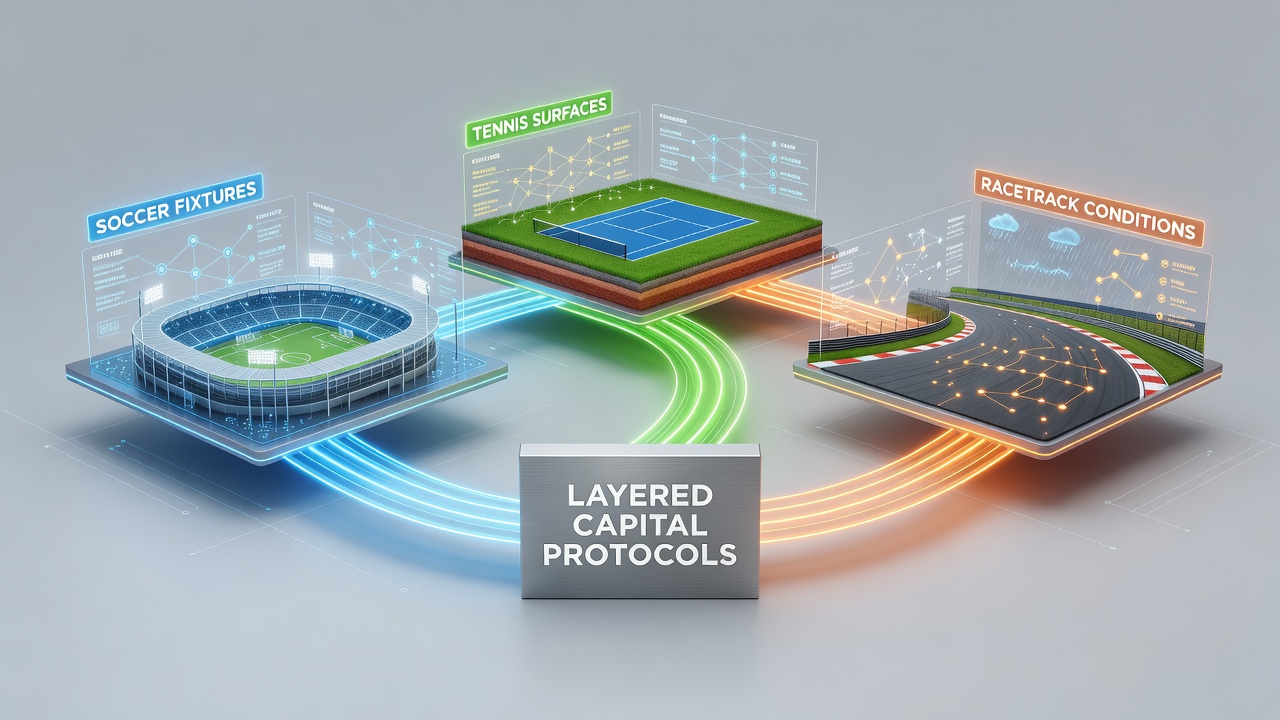
Layered Protocols for Capital Management Using Integrated Form Signals from Soccer, Tennis, and Horse Racing
Analysts in sports performance tracking combine data streams from soccer fixtures, tennis playing surfaces, and racetrack conditions to construct layered capital protocols that allocate stakes across multiple bet types. These protocols organize signals into tiers, where primary layers draw on historical performance metrics while secondary layers incorporate live variables such as weather adjustments or injury reports. Researchers at the University of Nevada's International Gaming Institute have documented how such structures help maintain consistent allocation patterns when data from different sports converge.
Core Components of Form Signal Collection
Soccer fixtures supply team-level indicators including possession percentages, expected goals models, and head-to-head records across league schedules. Observers note that these metrics gain additional weight when cross-referenced with travel distances between matches. Tennis surface data covers court types such as clay, grass, and hard courts, along with player adaptation rates measured through win percentages on each surface. Racetrack conditions contribute variables like track moisture levels, rail positions, and pace profiles recorded during training sessions and race days. Systems that merge these streams place each category into distinct protocol layers so that capital deployment decisions reflect the combined strength of signals rather than isolated statistics.
Building the Layered Structure
Primary layers focus on baseline form derived from season-long trends, while mid-level layers adjust for surface-specific or condition-specific modifiers. Upper layers apply real-time filters such as late scratches in horse racing or court speed changes in tennis. Data from the Canadian Centre for Ethics in Sport shows that organizations using multi-layer frameworks report more stable capital curves when compared against single-sport approaches. The process begins with raw data ingestion, proceeds through normalization steps that align different scoring systems, and concludes wth threshold calculations that determine stake sizes for each protocol tier.
Integration Techniques Across Sports
One common method maps soccer fixture difficulty ratings onto tennis surface compatibility scores, then overlays racetrack speed figures to produce a composite index. This index feeds into allocation rules that scale exposure according to layer depth. For instance, a high composite score might trigger capital release from the primary layer while reserving secondary funds for in-play adjustments. Studies from the Australian Sports Commission indicate that such cross-sport mapping improves signal reliability when surface or track variables shift unexpectedly. Teams managing these protocols often run simulation cycles that test historical data sets from October periods, including 2026 fixtures, to verify layer stability under varied conditions.
Implementation requires software that ingests fixture schedules, surface databases, and track reports simultaneously. The resulting outputs guide decisions on accumulator construction, where selections from each sport must meet minimum layer thresholds before capital commitment occurs. Figures from industry reports reveal that protocols emphasizing surface and track adjustments reduce variance in capital drawdowns during periods of high fixture density.

Practical Application in October 2026 Schedules
During October 2026, European soccer leagues overlap with indoor tennis tournaments on hard courts and autumn racetrack meetings featuring softer ground conditions. Protocol managers align these calendars by feeding updated surface and track data into the mid-level layers first, then recalibrating primary allocations based on revised composite scores. This sequence allows capital to remain distributed across ongoing soccer campaigns while capturing short-term opportunities in tennis and racing. Observers note that the approach maintains separation between long-term form layers and short-cycle condition layers, preventing any single sport's volatility from dominating overall capital movement.
Monitoring and Adjustment Mechanisms
Regular review cycles compare actual outcomes against layer predictions, updating weighting factors when discrepancies exceed predefined tolerances. External sources such as reports from the European Gaming and Betting Association provide aggregate benchmarks that help calibrate these tolerances across different operator environments. Adjustment protocols also incorporate geographic variations, since racetrack moisture patterns in one region may differ markedly from those in another. The result is a dynamic yet structured system where form signals from soccer fixtures, tennis surfaces, and racetrack conditions continue to feed the same layered capital framework without requiring complete redesigns when conditions change.
Conclusion
Layered capital protocols that unite form signals from multiple sports rely on systematic data collection, tiered processing, and periodic recalibration to sustain allocation discipline. Organizations that implement these structures draw on performance indicators across soccer, tennis, and horse racing to inform capital decisions while preserving separation between baseline trends and situational adjustments. Continued refinement of integration techniques supports consistent application as fixture calendars and surface conditions evolve.